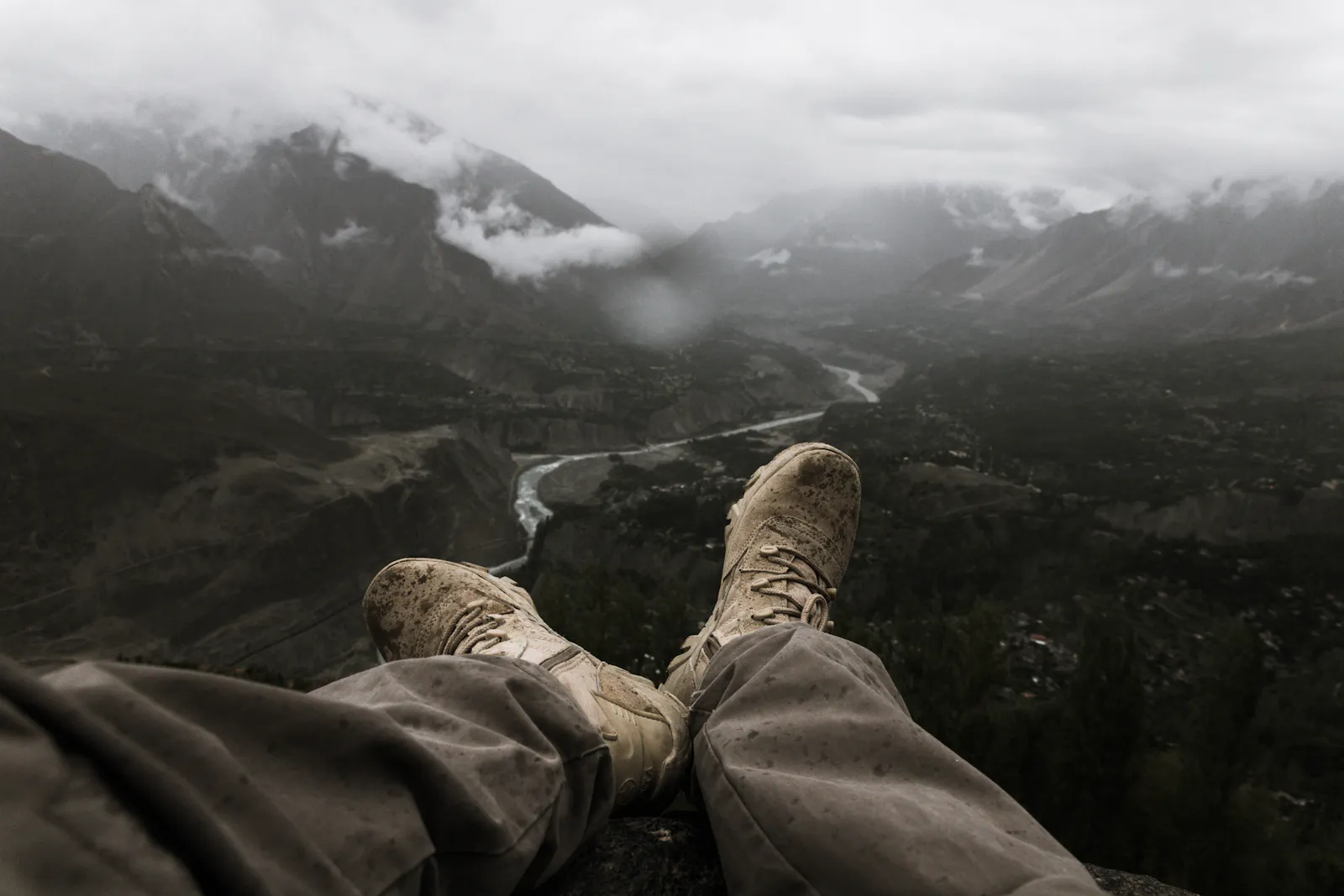
walking boots
Best Walking Boots for UK Walks: Grip, Waterproofing, and Break-In
A grounded guide to choosing walking boots for wet fields, muddy paths, colder days, and rougher UK walks.
Published 8 June 2026 Updated 13 June 2026
By Ty
Ty's field notes
Read it like a fitting-room note.
Start with the walk. Then look for the thing that could still make the shoe wrong.
- Walk
- walking boots
- Watch
- Check current size, width, colour, seller, and return terms before buying.
- Basis
- Research-based. No hands-on testing claimed.
- Product links checked 13 June 2026.
Choose the next condition
Do not stop at one guide if the walk has another problem.
A shoe can pass one check and fail the next. Use this map to keep narrowing before you open a product page.
Walking shoes vs walking boots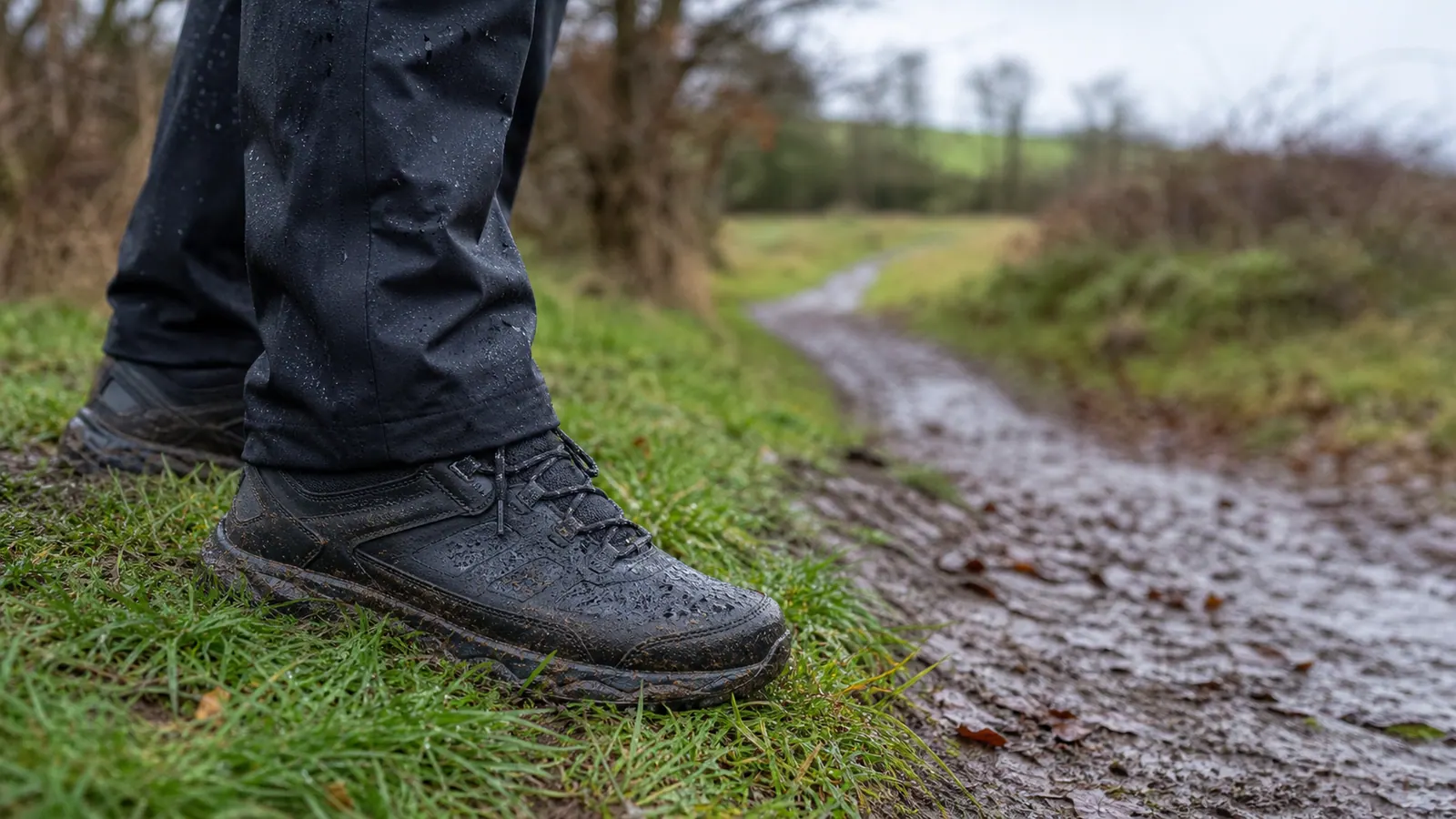 Wet path Rain, grass, and puddles Check waterproofing against breathability, grip, and collar height before trusting the word waterproof.
 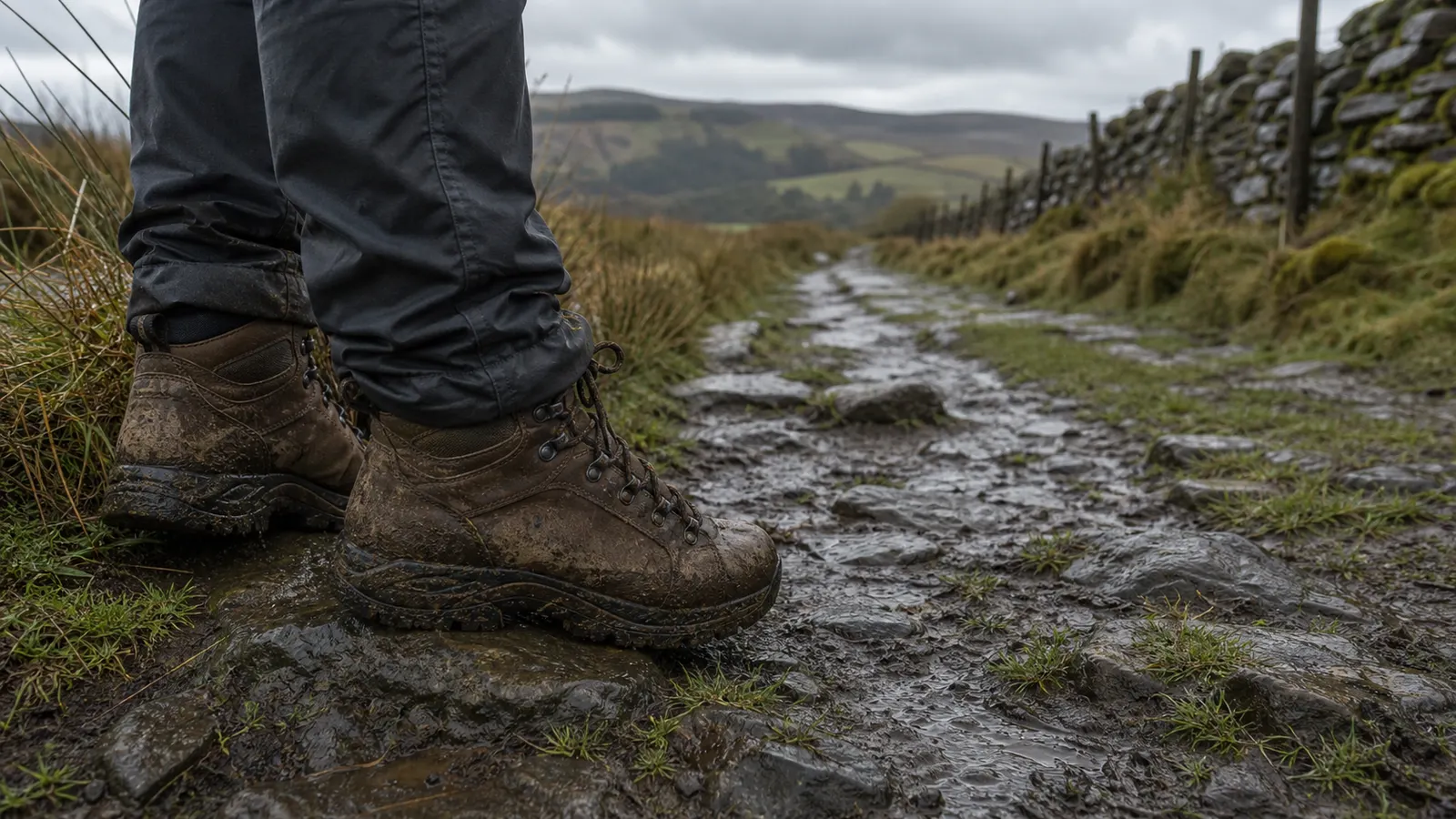 Rougher routes When a boot starts to make sense Mud, cold, rough ground, and ankle coverage can matter more than a lighter low shoe.
 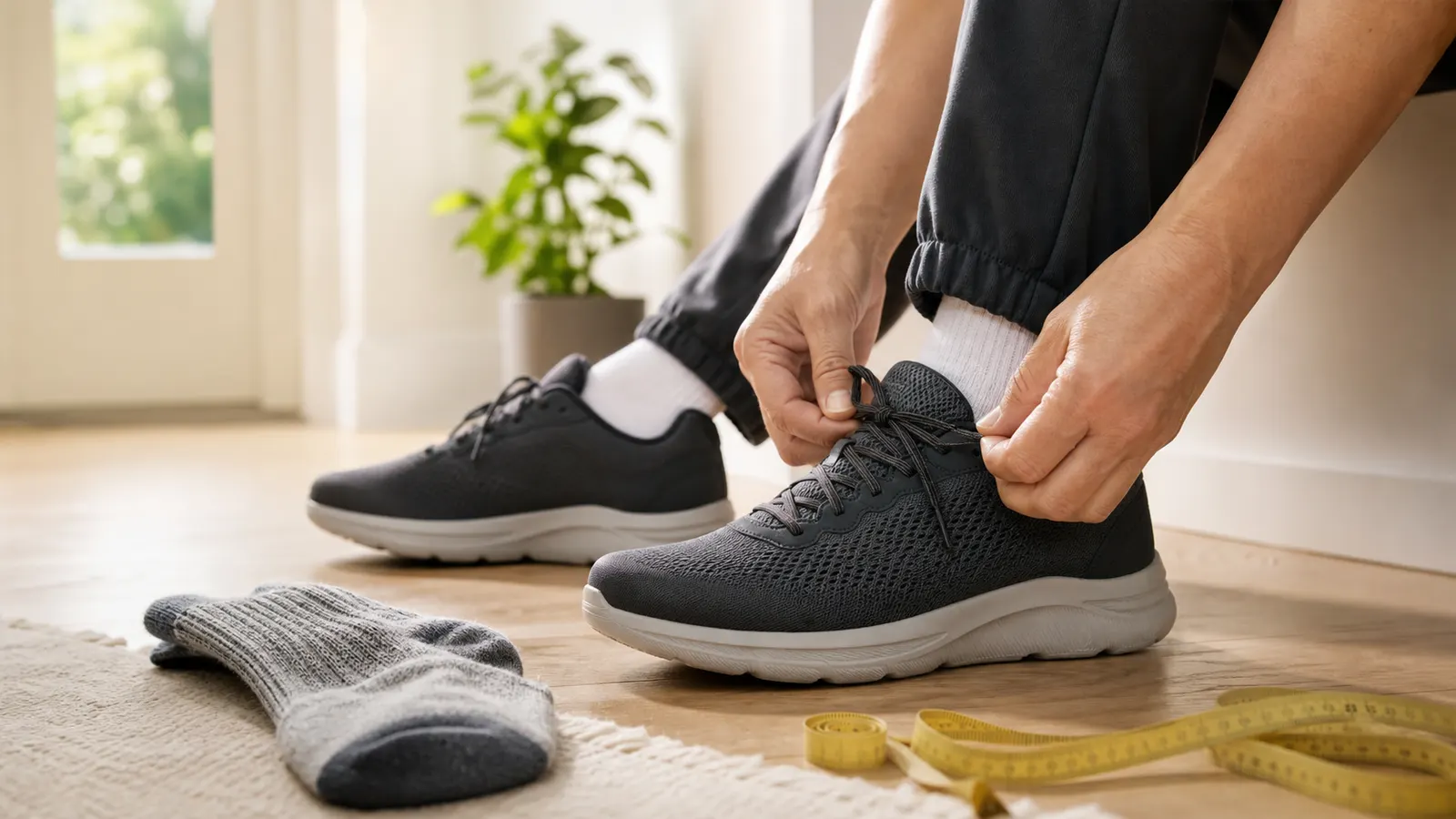 Fit check Toe room without heel slip Use width, lacing, socks, and returns as part of the decision, not as afterthoughts.
 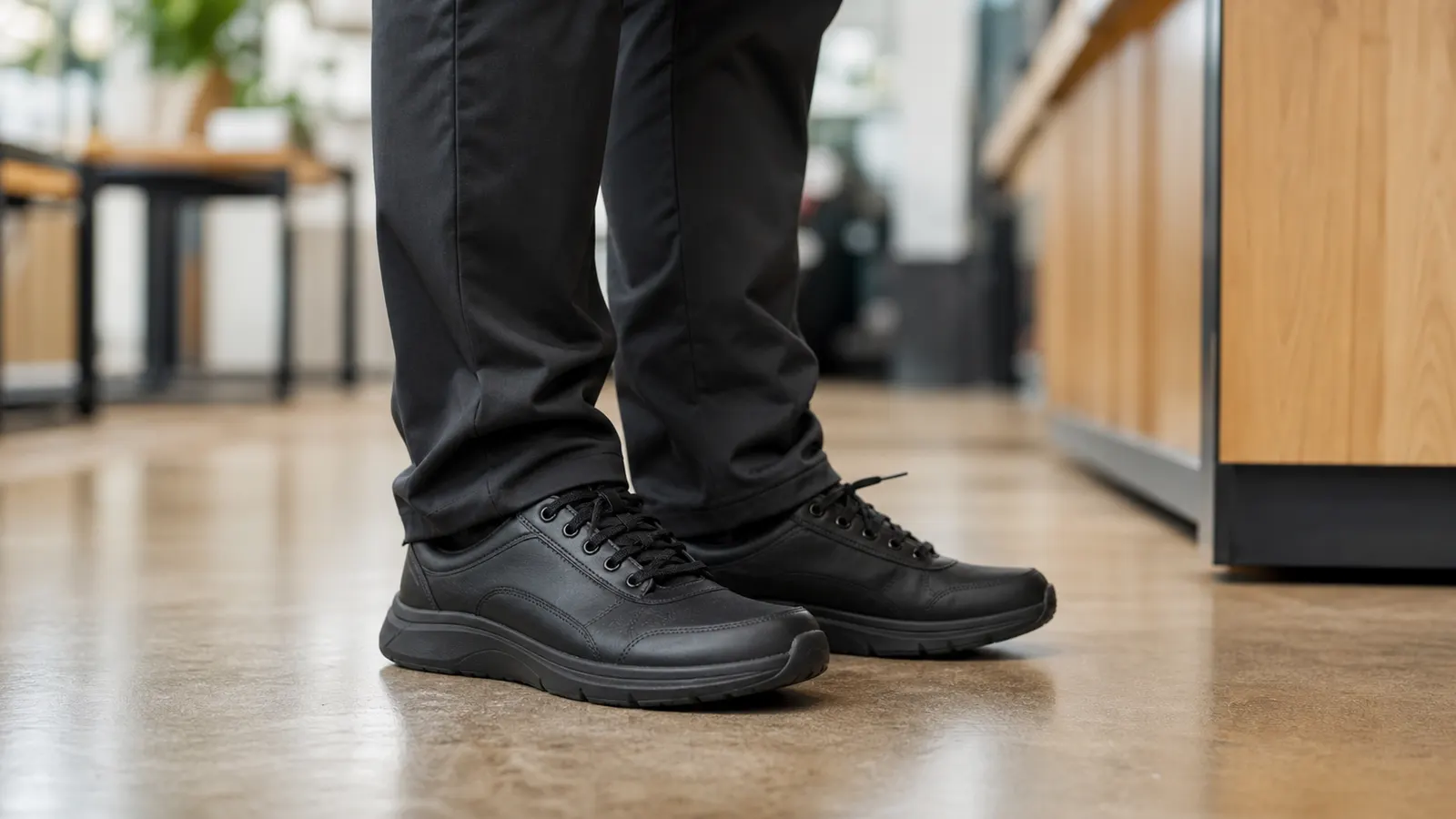 Hard floors Standing and shift comfort Cushioning has to stay stable after the first few minutes, especially on work floors.
 A walking boot is for the days when a shoe starts to feel a bit too polite.
Mud.
Cold grass.
Loose stones.
Wet fields.
That slow grey weather where the ground seems to keep a memory of rain.
For those walks, a boot can make sense.
For dry pavements, it can be too much.
Boots earn their place on rougher ground
The main reason to choose boots is not drama.
It is coverage.
A boot gives more protection around the ankle, more material between your foot and the ground, and usually a more serious outsole.
That helps on muddy paths and uneven ground.
It also adds weight.
If your normal walk is shops, school runs, commutes, and dry parks, a lighter walking shoe may be kinder.
Grip matters more than looking rugged
Deep lugs are useful when the ground is soft.
They are less important on dry pavement.
A boot can look tough and still feel poor on wet stone if the outsole is wrong for the surface.
Read recent buyer feedback around wet grip.
Look for comments from people using the boots in similar conditions, not only mountain photos and clean product shots.
Waterproofing has limits
Waterproof boots help with rain, wet grass, puddles, and mud.
They do not make every walk dry.
Water can still come over the collar.
Materials still need care.
Membranes can feel warm.
If a boot gets soaked inside, it can take longer to dry than a lighter shoe.
That is the trade.
Break-in should be sensible
Some boots need a little time.
That is normal.
Pain is not a feature.
Try boots indoors first.
Wear the socks you expect to walk in.
Check the heel, the toe room, and any rubbing around the ankle.
Do not save the first real wear for a long wet walk.
That is how a small mistake becomes the whole day.
Good first shortlist
Choose a waterproof walking boot for wet fields, mud, colder days, and rougher paths.
Choose a waterproof low-cut walking shoe if you want something lighter for rain and towpaths.
Choose neither if your normal walking is mostly dry pavement and you already have a breathable shoe that fits well.
The quiet test is simple.
Does the boot make your actual walk easier, or does it just look like the kind of person you hoped to be?
Product shortlist
These are research slots to check against fit, returns, price, and current availability before buying.
KEEN
KEEN Targhee IV Waterproof Hiking Boot
Best for: Muddy paths, colder wet days, and walks where ankle coverage and a roomier forefoot matter.
A mid-cut waterproof KEEN boot with KEEN.DRY waterproofing, KEEN.FUSION fused construction, a roomy Original Fit forefoot, and a rugged outsole for wet and uneven paths.
- KEEN.DRY waterproof membrane
- KEEN.FUSION bonded construction
- KEEN.RUGGED outsole
- Original Fit forefoot
Good fit when
- Mid-cut coverage for wet grass and mud
- Roomier forefoot than narrow boot shapes
- Fused construction and rugged outsole positioning
Check first
- Warmer and heavier than low walking shoes
- Roomy fit may not suit narrow feet
- Still needs indoor fit checks before outdoor wear
Based on official KEEN UK product pages and the Amazon UK product page checked on 2026-06-13. No hands-on testing is claimed.
Product/link check: 13 June 2026
Official KEEN UK product pages and Amazon UK direct product page checked on 2026-06-13. Size, width, colour, seller, and price can change.
Affiliate link opens Amazon UK; check current size, colour, seller, delivery, and returns before buying.
Columbia
Columbia Peakfreak II OutDry
Best for: Wet grass, towpaths, rainy commutes, and light trail paths where a low-cut waterproof shoe is enough.
A low-cut Columbia waterproof hiking shoe with OutDry construction, trail-focused grip, and a lighter profile than a mid walking boot.
- OutDry waterproof construction
- ADAPT TRAX traction
- Low-cut upper
- Techlite+ cushioning
Good fit when
- Useful in rain and wet grass
- Lighter than boots
- Trail-focused grip
Check first
- Low collar still lets water in from above
- Usually warmer than mesh shoes
- Check seller, exact size, and recent durability feedback
Based on official Columbia UK product pages and the Amazon UK product page checked on 2026-06-13. No hands-on testing is claimed.
Product/link check: 13 June 2026
Official Columbia UK men's and women's product pages and Amazon UK direct product page checked on 2026-06-13. Size, colour, seller, and price can change.
Affiliate link opens Amazon UK; check current size, colour, seller, delivery, and returns before buying.
Quick comparison
| Pick | Best for | What to check | Caveat | Link |
|---|---|---|---|---|
| KEEN Targhee IV Waterproof Hiking Boot | Mud, wet fields, colder days, and uneven paths | KEEN.DRY waterproofing, mid-cut coverage, roomier forefoot checks | Check current size, width, colour, seller, and return terms before buying. | View |
| Columbia Peakfreak II OutDry | Lighter wet walks where ankle coverage is not needed | OutDry waterproofing, low-cut shape, trail grip | Less protection in mud, cold, and rough ground; check current seller, size, and returns. | View |
Pros
- Better coverage for mud and wet grass
- More protective on rougher paths
- Useful in colder weather
Cons
- Heavier than shoes
- Can be warm on dry pavements
- May need careful break-in
FAQs
Do I need walking boots for UK walks?
Not always. Boots make more sense for mud, cold, rougher paths, and longer wet walks. For dry pavements and parks, walking shoes may be easier.
Should walking boots feel stiff at first?
Some boots feel firmer than shoes, but they should not cause sharp rubbing or obvious pressure points when checked indoors.
Keep choosing from here
A good shoe choice usually comes from one more check.
If this guide feels close but not exact, use these next pages to narrow the fit, weather, support, and walking surface before you buy.
Related reading
dog walking shoes
Best Walking Shoes for Dog Walking in the UK
Dog-walking shoes need to handle repeated wet grass, pavements, muddy parks, quick exits, and cleaning without pretending one shoe solves every route.
Updated 14 June 2026
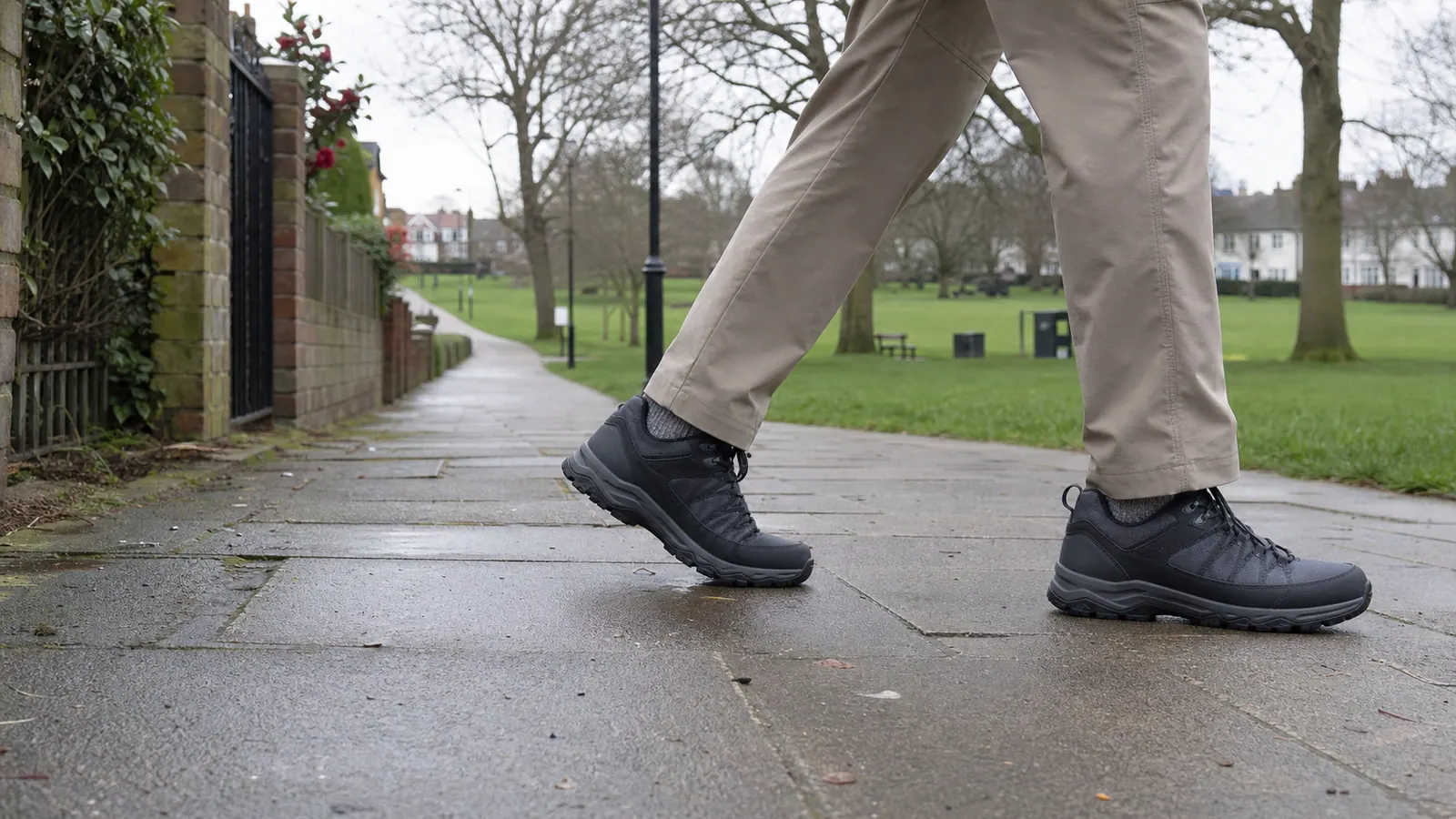
best walking shoes
Best Walking Shoes for Everyday Walking: A Practical Shortlist
Everyday walking shoes need quiet strengths: fit, grip, comfort, and a return window before the first wet pavement.
Updated 13 June 2026
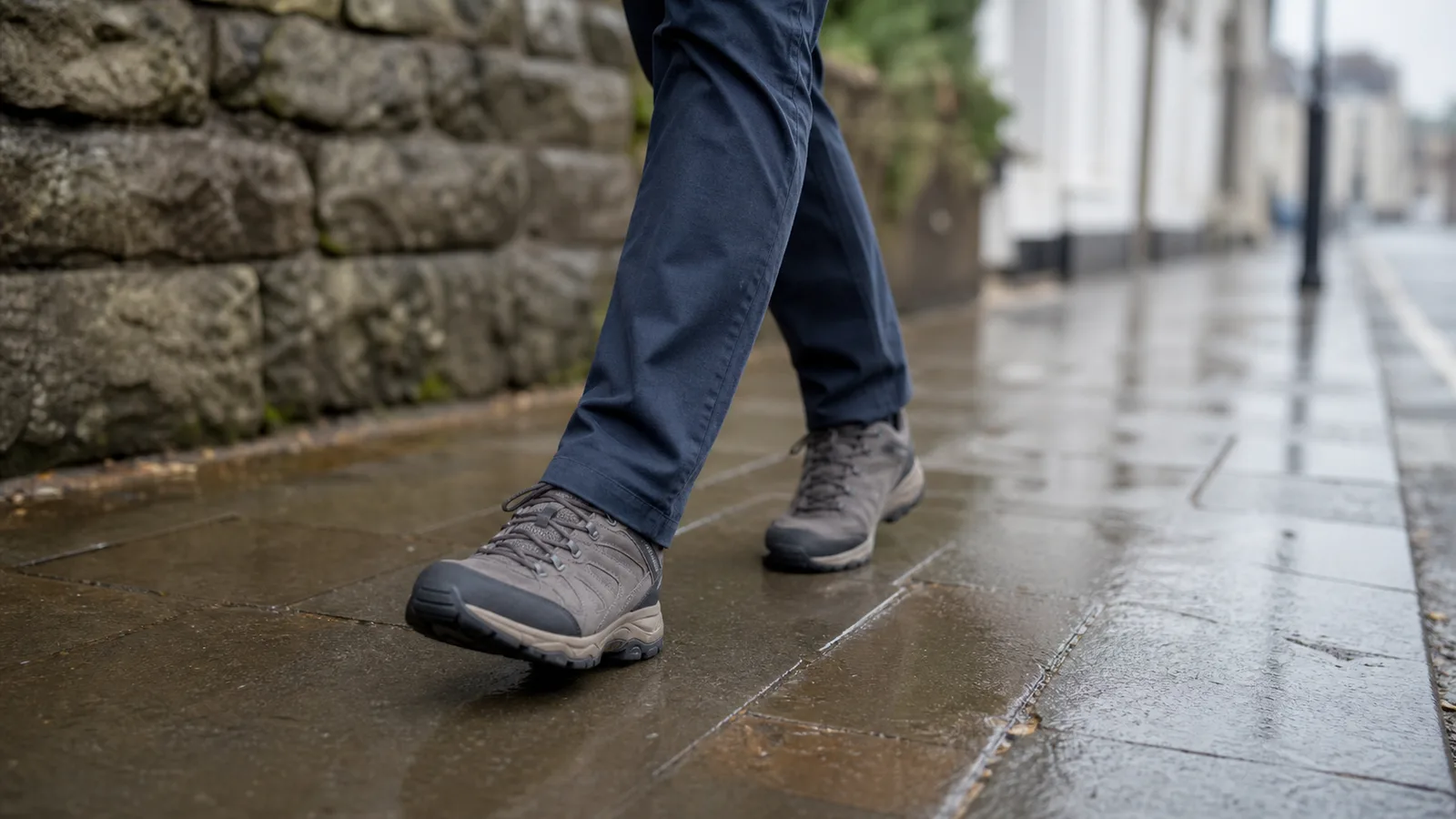
walking shoes for men
Best Walking Shoes for Men: Fit, Grip, and Daily Comfort
A plain guide to men's walking shoes for daily use, wet paths, wide feet, work days, and long errands.
Updated 13 June 2026