
walking boots
Walking Shoes vs Walking Boots: Which One Makes Sense?
Walking shoes feel lighter. Boots protect more. The right choice depends on the worst part of your usual route.
Published 7 June 2026 Updated 13 June 2026
By Ty
Ty's field notes
Read it like a fitting-room note.
Start with the walk. Then look for the thing that could still make the shoe wrong.
- Walk
- walking boots
- Watch
- Less ankle coverage and mud protection than a boot; not waterproof or workplace safety footwear.
- Basis
- Research-based. No hands-on testing claimed.
- Product links checked 13 June 2026.
Choose the next condition
Do not stop at one guide if the walk has another problem.
A shoe can pass one check and fail the next. Use this map to keep narrowing before you open a product page.
Waterproof walking shoes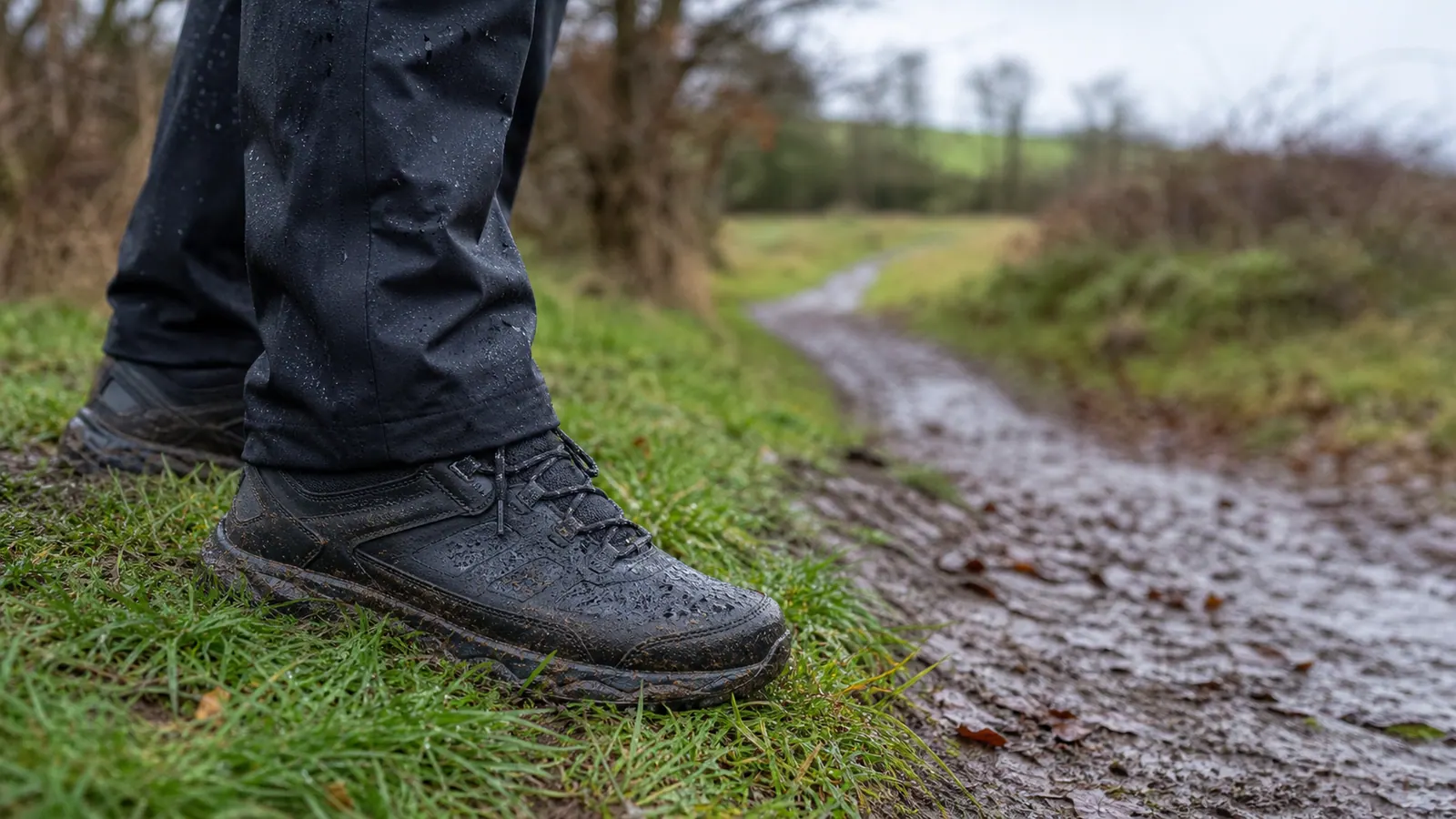 Wet path Rain, grass, and puddles Check waterproofing against breathability, grip, and collar height before trusting the word waterproof.
 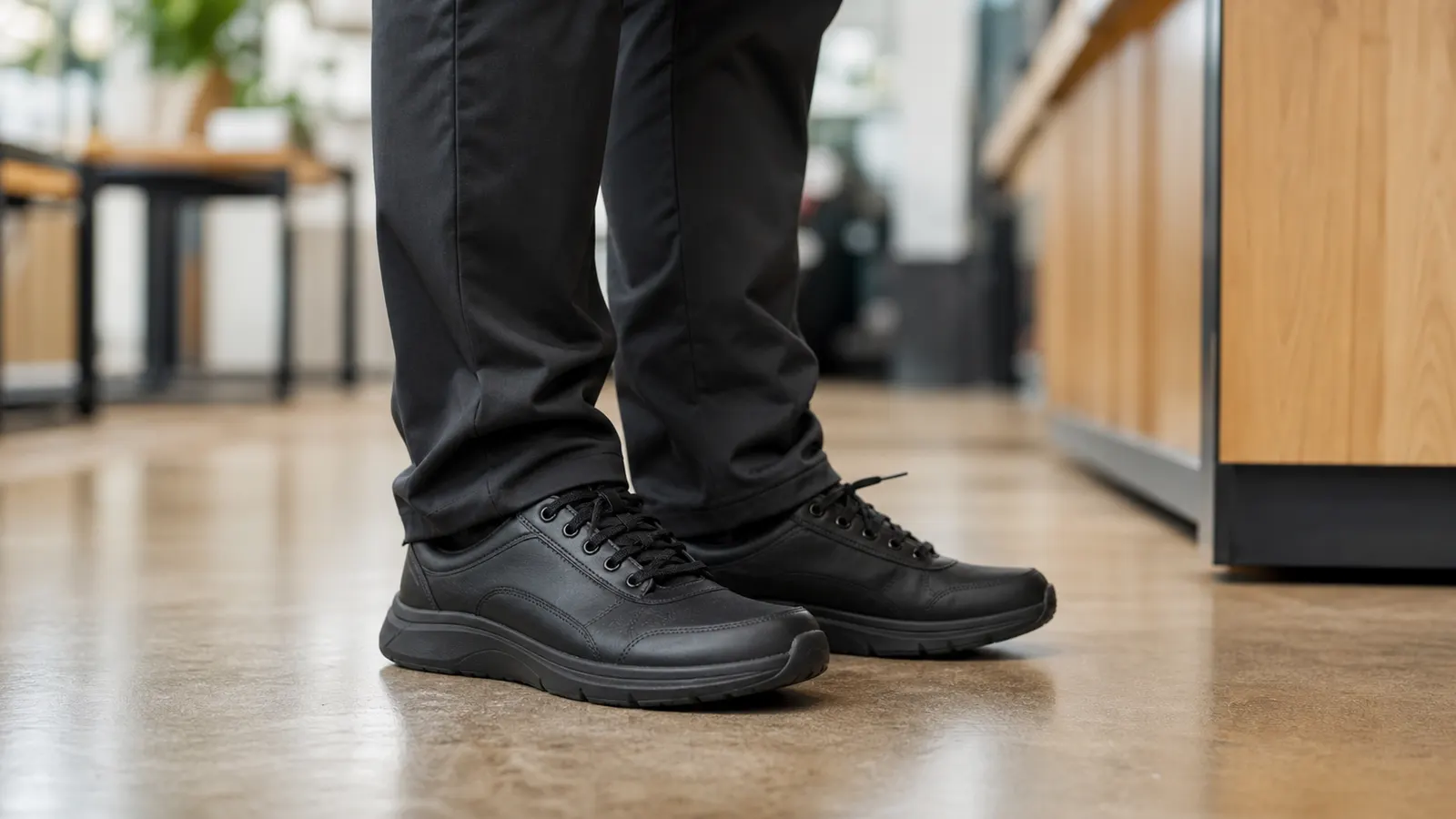 Hard floors Standing and shift comfort Cushioning has to stay stable after the first few minutes, especially on work floors.
 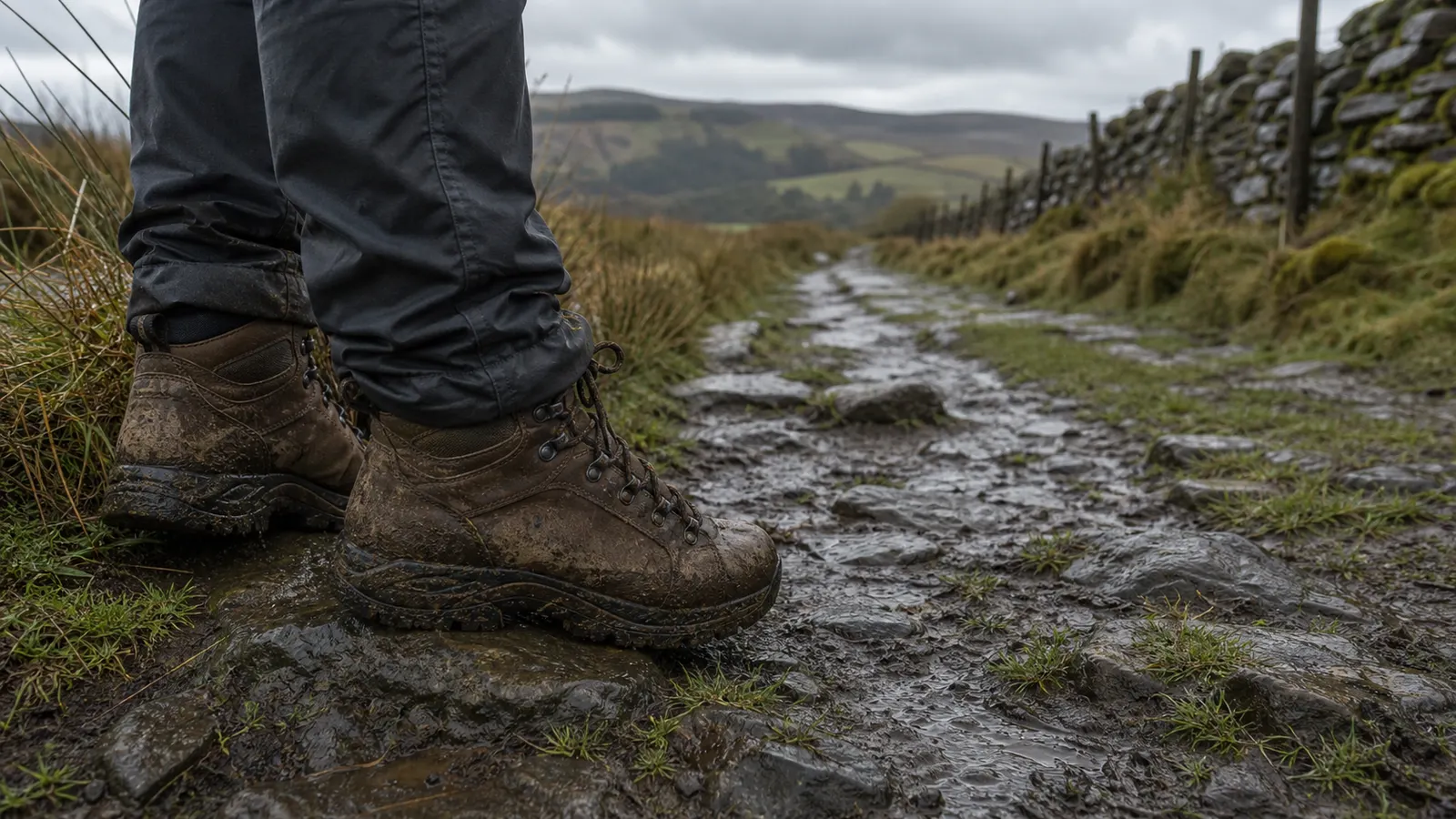 Rougher routes When a boot starts to make sense Mud, cold, rough ground, and ankle coverage can matter more than a lighter low shoe.
 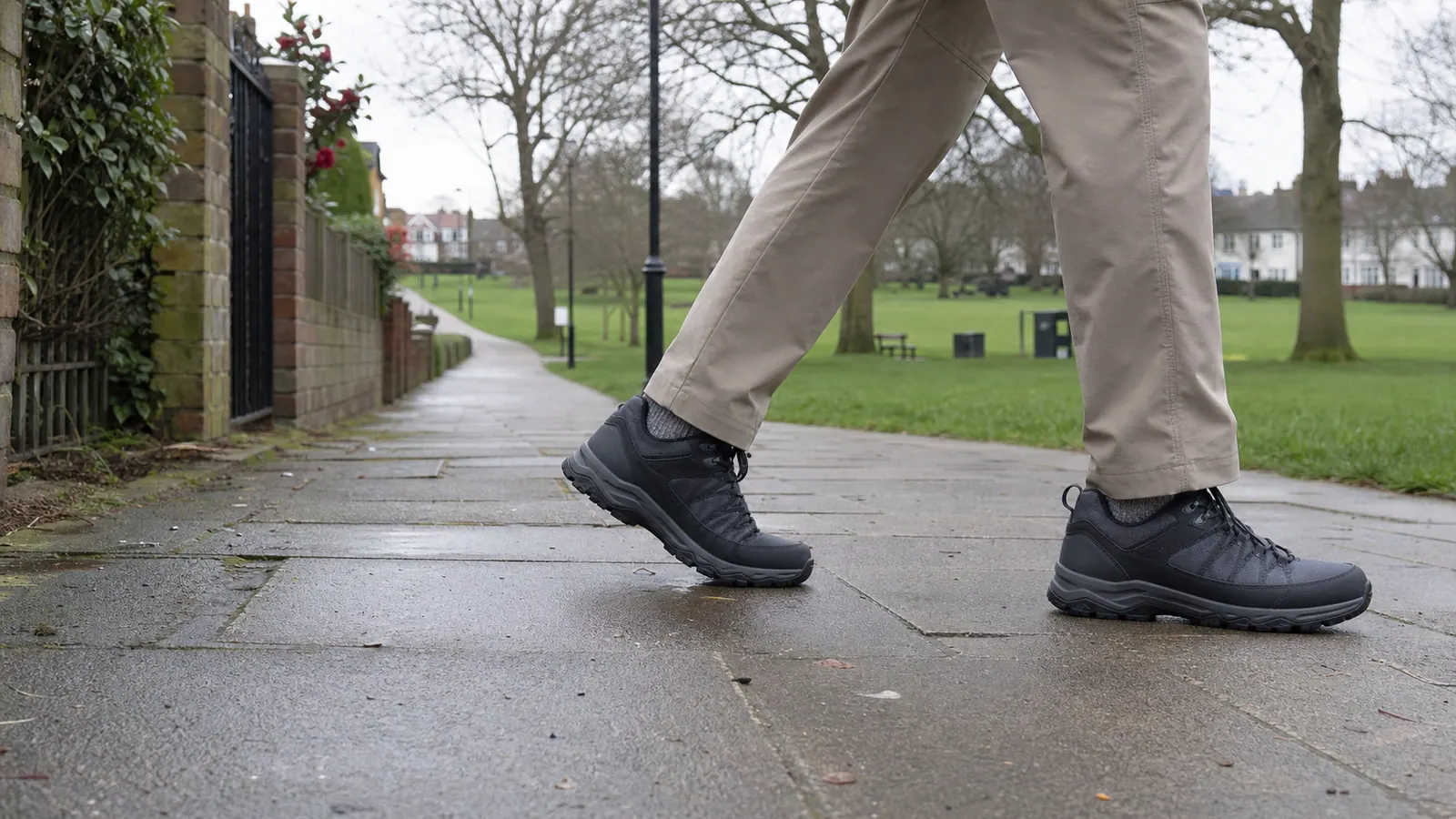 Daily miles Pavements, parks, and errands For ordinary walks, comfort, outsole wear, and fit checks beat the most technical spec sheet.
 Walking shoes are easier to like.
Boots are easier to trust when the path turns ugly.
That is the simple version.
Choose walking shoes when the route is kind
Shoes make sense for pavements, parks, canal paths, travel days, and light trails.
They are lighter.
They usually flex more naturally.
They are easier to wear all day when the weather is not doing anything dramatic.
They also dry faster in many real situations, especially if they are not built with a heavy waterproof lining. For people who walk mostly from the front door, through town, and across mild paths, that lower weight can matter more than extra height.
Choose boots when the route has teeth
Boots make more sense for mud, rough ground, wet grass, cold days, and places where ankle coverage feels useful.
They are not magic.
They can still leak if water gets above the collar.
They can still rub if the fit is wrong.
But they give more coverage and more protection.
Boots also make sense when you regularly brush through long wet grass or stand around in poor weather. The higher collar does not guarantee dry feet, but it gives splashes and mud less easy access than a low shoe.
Waterproofing changes the choice
A waterproof shoe is good for rain and shallow wet conditions.
A waterproof boot is better when grass is high, mud is deep, or splashes reach higher.
The trade-off is warmth and drying time.
Once water gets inside a waterproof boot, it may take patience to dry.
If you walk in warmer months, think about breathability as well as rain. A waterproof boot that feels reassuring in February can feel heavy and hot on a dry June pavement. One pair may not cover every season well.
Weight matters more than people admit
A heavy boot can feel reassuring at the start.
After a long walk, it can feel like work.
If you mostly walk on gentle ground, a lighter shoe may be the kinder choice.
The rule I would use
Buy for the worst regular part of your route.
Not the imaginary mountain.
Not the perfect dry pavement.
The worst bit you actually meet.
If that worst bit is only a short muddy entrance, a grippy shoe may be enough. If the worst bit is half the walk, the boot starts to make more sense. Let the repeated problem decide.
Product shortlist
These are research slots to check against fit, returns, price, and current availability before buying.
Skechers
Skechers GO WALK Arch Fit 2.0 - Grand Select 2
Best for: Pavements, errands, commutes, and long standing days where ordinary walking shoes are allowed.
A men's Skechers Hands Free Slip-ins walking trainer with Arch Fit, Heel Pillow, ULTRA GO cushioning, and a stability-focused dual-density outsole.
- Hands Free Slip-ins
- Heel Pillow
- Arch Fit removable insole
- ULTRA GO cushioning
- Machine washable
Good fit when
- Arch Fit support system
- Slip-in entry with heel-hold positioning
- Stability-focused dual-density outsole
Check first
- Men's sizing on the checked route
- Not waterproof
- Not a safety or slip-resistant work shoe
Based on official Skechers UK product information and the Amazon UK product page checked on 2026-06-13. No hands-on testing is claimed.
Product/link check: 13 June 2026
Official Skechers UK product page and Amazon UK direct product page checked on 2026-06-13. Size, width, colour, seller, price, and returns can change.
Affiliate link opens Amazon UK; check current size, width, colour, seller, delivery, and returns before buying.
KEEN
KEEN Targhee IV Waterproof Hiking Boot
Best for: Muddy paths, colder wet days, and walks where ankle coverage and a roomier forefoot matter.
A mid-cut waterproof KEEN boot with KEEN.DRY waterproofing, KEEN.FUSION fused construction, a roomy Original Fit forefoot, and a rugged outsole for wet and uneven paths.
- KEEN.DRY waterproof membrane
- KEEN.FUSION bonded construction
- KEEN.RUGGED outsole
- Original Fit forefoot
Good fit when
- Mid-cut coverage for wet grass and mud
- Roomier forefoot than narrow boot shapes
- Fused construction and rugged outsole positioning
Check first
- Warmer and heavier than low walking shoes
- Roomy fit may not suit narrow feet
- Still needs indoor fit checks before outdoor wear
Based on official KEEN UK product pages and the Amazon UK product page checked on 2026-06-13. No hands-on testing is claimed.
Product/link check: 13 June 2026
Official KEEN UK product pages and Amazon UK direct product page checked on 2026-06-13. Size, width, colour, seller, and price can change.
Affiliate link opens Amazon UK; check current size, colour, seller, delivery, and returns before buying.
Columbia
Columbia Peakfreak II OutDry
Best for: Wet grass, towpaths, rainy commutes, and light trail paths where a low-cut waterproof shoe is enough.
A low-cut Columbia waterproof hiking shoe with OutDry construction, trail-focused grip, and a lighter profile than a mid walking boot.
- OutDry waterproof construction
- ADAPT TRAX traction
- Low-cut upper
- Techlite+ cushioning
Good fit when
- Useful in rain and wet grass
- Lighter than boots
- Trail-focused grip
Check first
- Low collar still lets water in from above
- Usually warmer than mesh shoes
- Check seller, exact size, and recent durability feedback
Based on official Columbia UK product pages and the Amazon UK product page checked on 2026-06-13. No hands-on testing is claimed.
Product/link check: 13 June 2026
Official Columbia UK men's and women's product pages and Amazon UK direct product page checked on 2026-06-13. Size, colour, seller, and price can change.
Affiliate link opens Amazon UK; check current size, colour, seller, delivery, and returns before buying.
Quick comparison
| Pick | Best for | What to check | Caveat | Link |
|---|---|---|---|---|
| Skechers GO WALK Arch Fit 2.0 - Grand Select 2 | Pavement, light paths, travel, and mixed daily use | lighter shoe feel, Arch Fit, Heel Pillow, stable outsole | Less ankle coverage and mud protection than a boot; not waterproof or workplace safety footwear. | View |
| KEEN Targhee IV Waterproof Hiking Boot | Mud, uneven paths, colder wet days, and ankle coverage | mid cut, waterproof membrane, roomier forefoot checks | Heavier and often warmer than shoes; check current fit and seller details before buying. | View |
Pros
- Clear decision logic
- Useful for UK weather
- Explains trade-offs
Cons
- No single winner
- Fit still matters most
- Exact route conditions vary
FAQs
Are walking boots better than walking shoes?
Not always. Boots give more coverage and protection, but shoes are lighter and often easier for everyday walking.
Do I need boots for UK country paths?
If the path is muddy, uneven, cold, or steep, boots can make sense. For pavements and mild paths, shoes may be enough.
Keep choosing from here
A good shoe choice usually comes from one more check.
If this guide feels close but not exact, use these next pages to narrow the fit, weather, support, and walking surface before you buy.
Related reading
dog walking shoes
Best Walking Shoes for Dog Walking in the UK
Dog-walking shoes need to handle repeated wet grass, pavements, muddy parks, quick exits, and cleaning without pretending one shoe solves every route.
Updated 14 June 2026
waterproof walking shoes
Best Walking Shoes for Rainy Commutes in the UK
Rainy commute shoes need grip, fit, and a sensible waterproofing tradeoff, not just a waterproof label.
Updated 14 June 2026
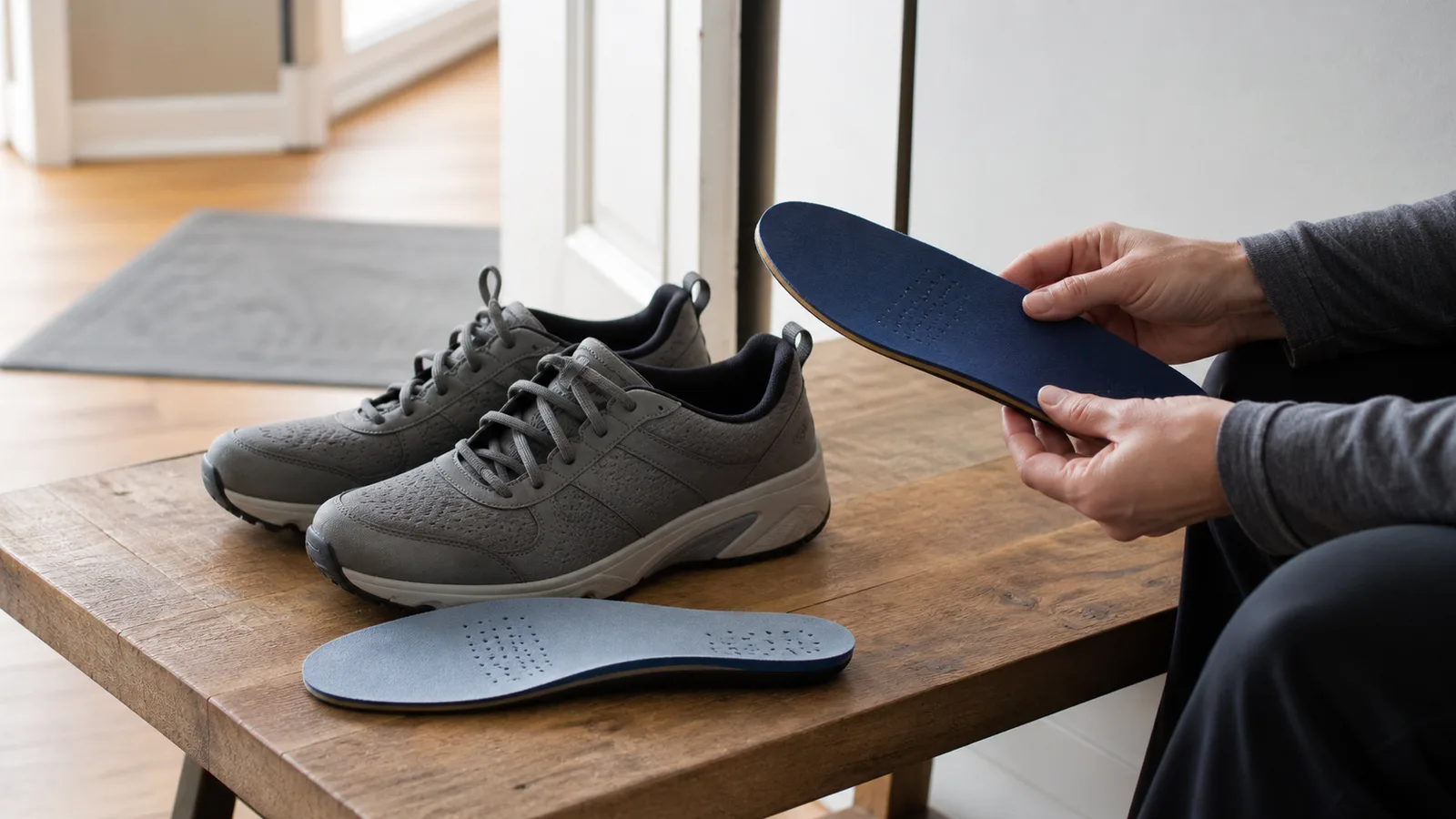
shoe care and accessories
Best Insoles for Walking Shoes: Buyer Criteria That Keep Fit First
Insoles can help tune the feel of a walking shoe, but they can also make a good fit worse. Start with shoe volume, support feel, and returns.
Updated 13 June 2026