walking guides
How to Choose Walking Shoes Without Getting Lost in Marketing
A slow, plain way to choose walking shoes by the walk you actually do.
Published 7 June 2026 Updated 12 June 2026
By Ty
Ty's field notes
Read it like a fitting-room note.
Start with the walk. Then look for the thing that could still make the shoe wrong.
- Walk
- walking guides
- Watch
- Does not replace trying shoes on
- Basis
- Editorial buying criteria. No product shortlist here.
- Use this before opening product pages.
Choose the next condition
Do not stop at one guide if the walk has another problem.
A shoe can pass one check and fail the next. Use this map to keep narrowing before you open a product page.
Best walking shoes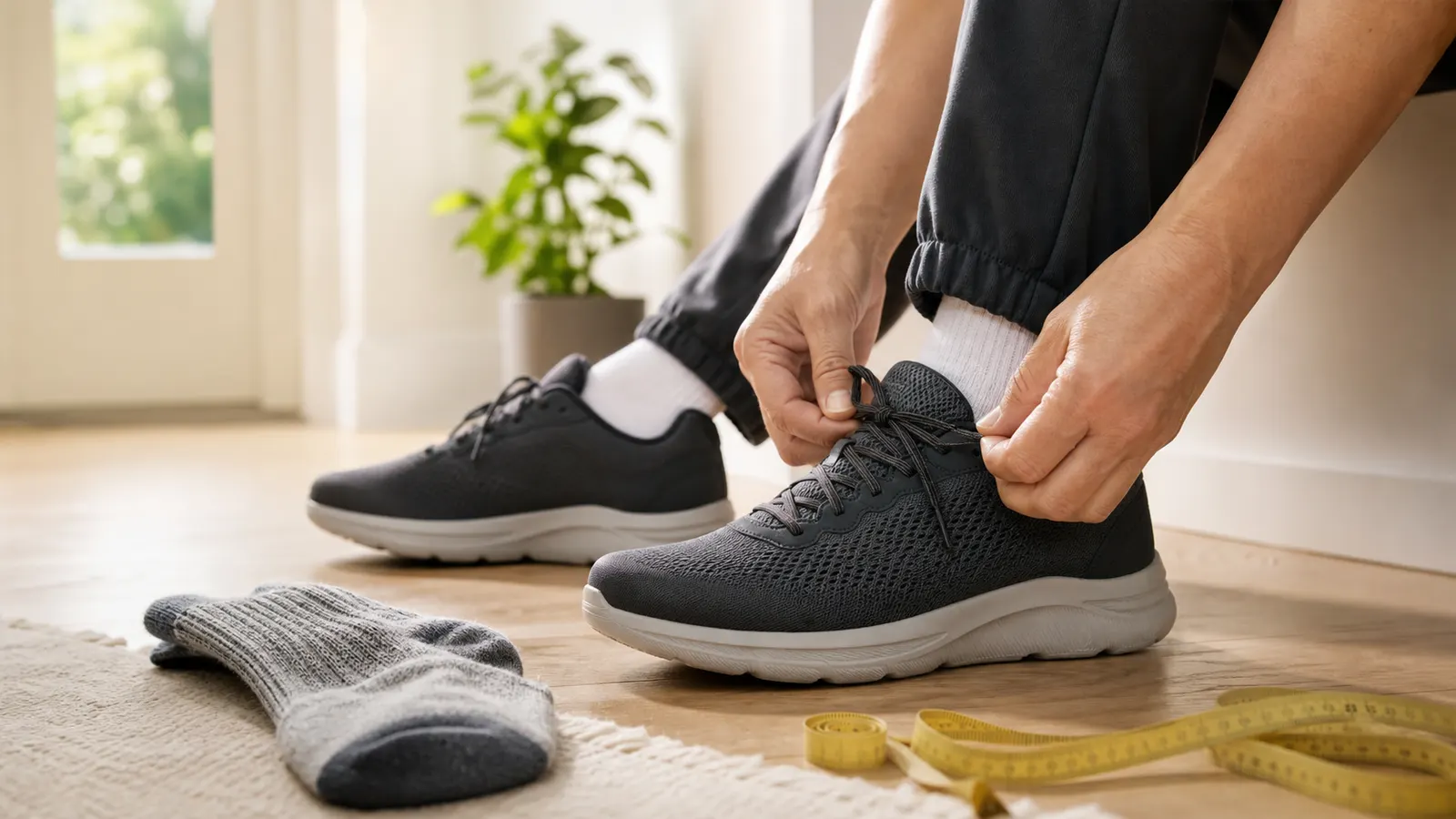 Fit check Toe room without heel slip Use width, lacing, socks, and returns as part of the decision, not as afterthoughts. Daily miles Pavements, parks, and errands For ordinary walks, comfort, outsole wear, and fit checks beat the most technical spec sheet.
 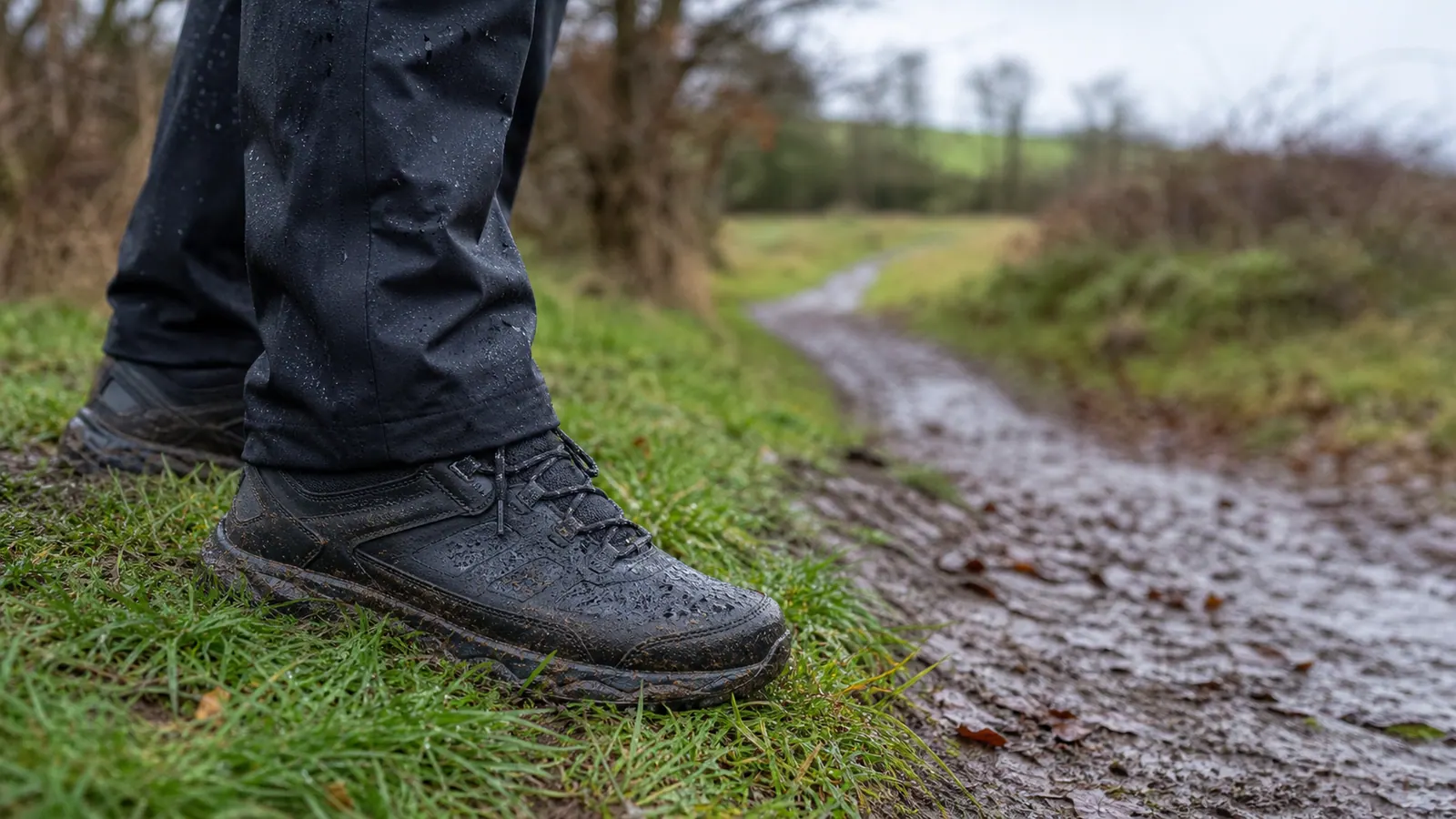 Wet path Rain, grass, and puddles Check waterproofing against breathability, grip, and collar height before trusting the word waterproof.
 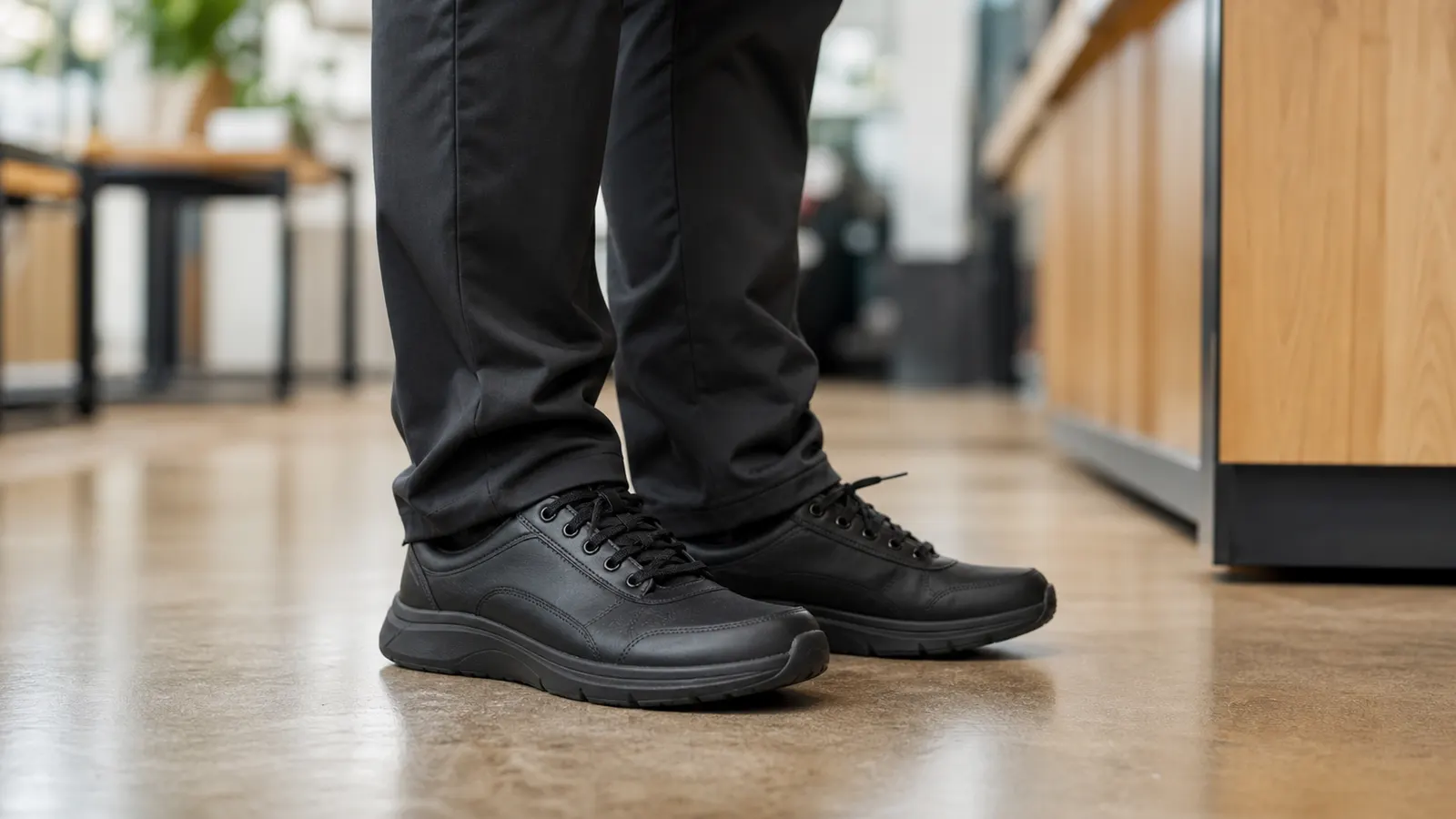 Hard floors Standing and shift comfort Cushioning has to stay stable after the first few minutes, especially on work floors.
 Walking shoe marketing has a loud voice.
Waterproofing.
Foam.
Grip.
Support.
Energy return.
The quieter question is better: what walk are you actually dressing for?
That one question saves more money than most spec sheets.
Start with terrain
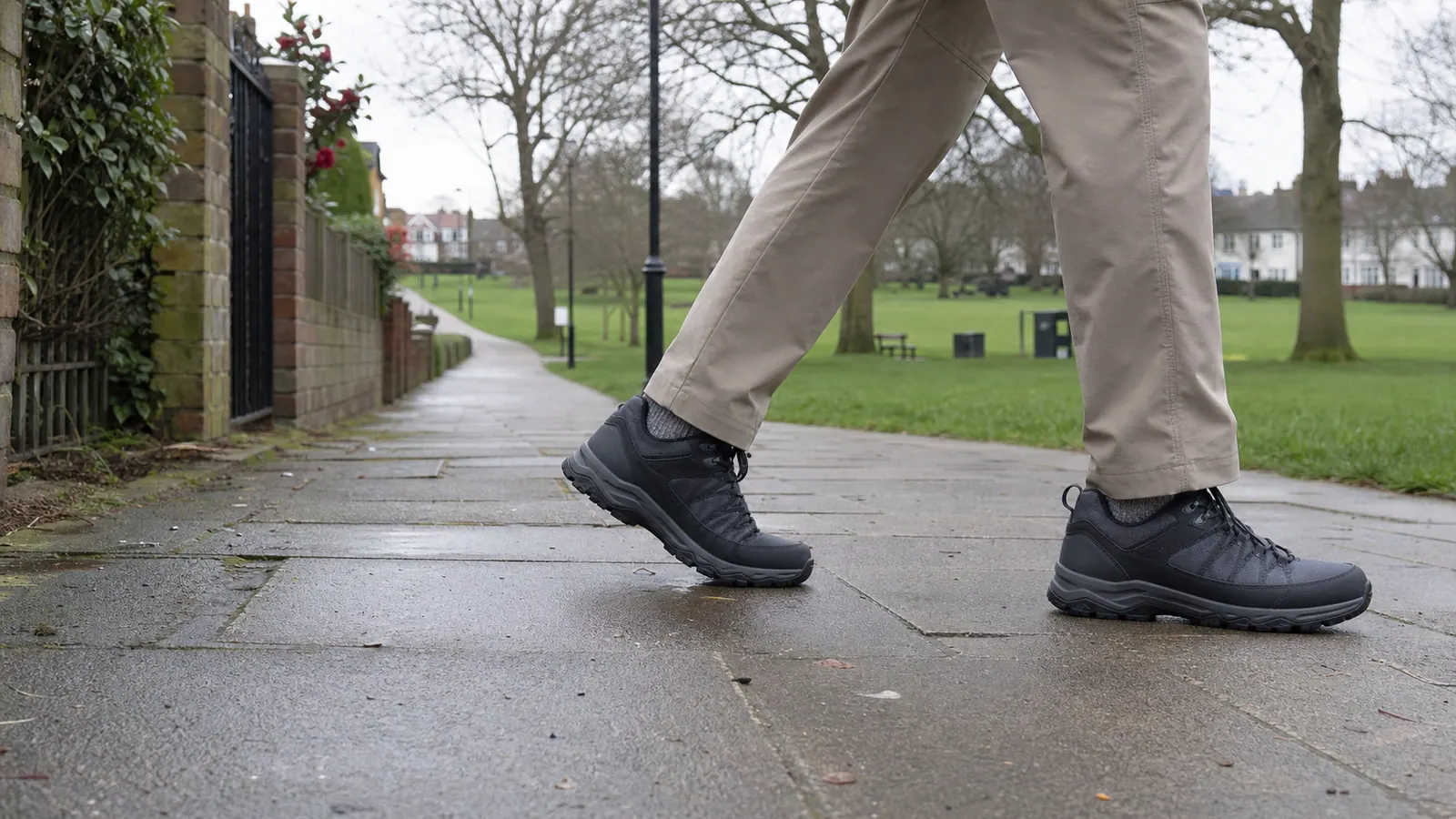
Pavements need comfort and stable cushioning.
Wet fields need grip and weather protection.
Rocky paths need protection underfoot.
Long travel days need comfort, breathability, and no small rubbing point waiting to become a problem.
Fit comes before features
A shoe can have the right words on the box and still be wrong.
Check length, width, toe room, heel hold, and whether your socks change the fit.
Try shoes indoors before committing them to outdoor use.
Clean floor first.
Wet pavement later.
Grip should match surface
Flat city soles can be fine for pavements.
Deeper lugs help on mud and grass.
Wet stone and smooth floors are their own problem.
If your route includes them, read the recent complaints, not only the star rating.
Waterproofing is a choice, not a default
Waterproof shoes help in rain and wet grass.
They can also run warmer.
If you mostly walk in dry weather, a breathable shoe may be kinder.
Support is personal
Some walkers like a flexible, light shoe.
Others prefer a firmer, more stable base.
If pain, injury, plantar fasciitis, or a diagnosed condition is involved, treat this as general buying information only.
It is not medical advice.
Speak to a qualified professional if symptoms continue, worsen, or affect how you walk.
The return policy is part of the product
Fit is hard to predict.
A clear return policy gives you time to listen to the shoe indoors.
That can be more valuable than a small discount.
Pros
- Simple buying framework
- Useful before reading product pages
- Works for shoes, boots, and sandals
Cons
- Does not replace trying shoes on
- Specific health needs may require professional advice
FAQs
What is the most important feature in walking shoes?
Fit is the first filter. Grip, cushioning, waterproofing, and support only help if the shoe fits your foot and your walking conditions.
Should walking shoes be tight or loose?
They should feel secure, with room for toes to move and no heel slipping. Tight shoes can rub; loose shoes can feel unstable.
Keep choosing from here
A good shoe choice usually comes from one more check.
If this guide feels close but not exact, use these next pages to narrow the fit, weather, support, and walking surface before you buy.
Related reading
dog walking shoes
Best Walking Shoes for Dog Walking in the UK
Dog-walking shoes need to handle repeated wet grass, pavements, muddy parks, quick exits, and cleaning without pretending one shoe solves every route.
Updated 14 June 2026
waterproof walking shoes
Best Walking Shoes for Rainy Commutes in the UK
Rainy commute shoes need grip, fit, and a sensible waterproofing tradeoff, not just a waterproof label.
Updated 14 June 2026
shoe care and accessories
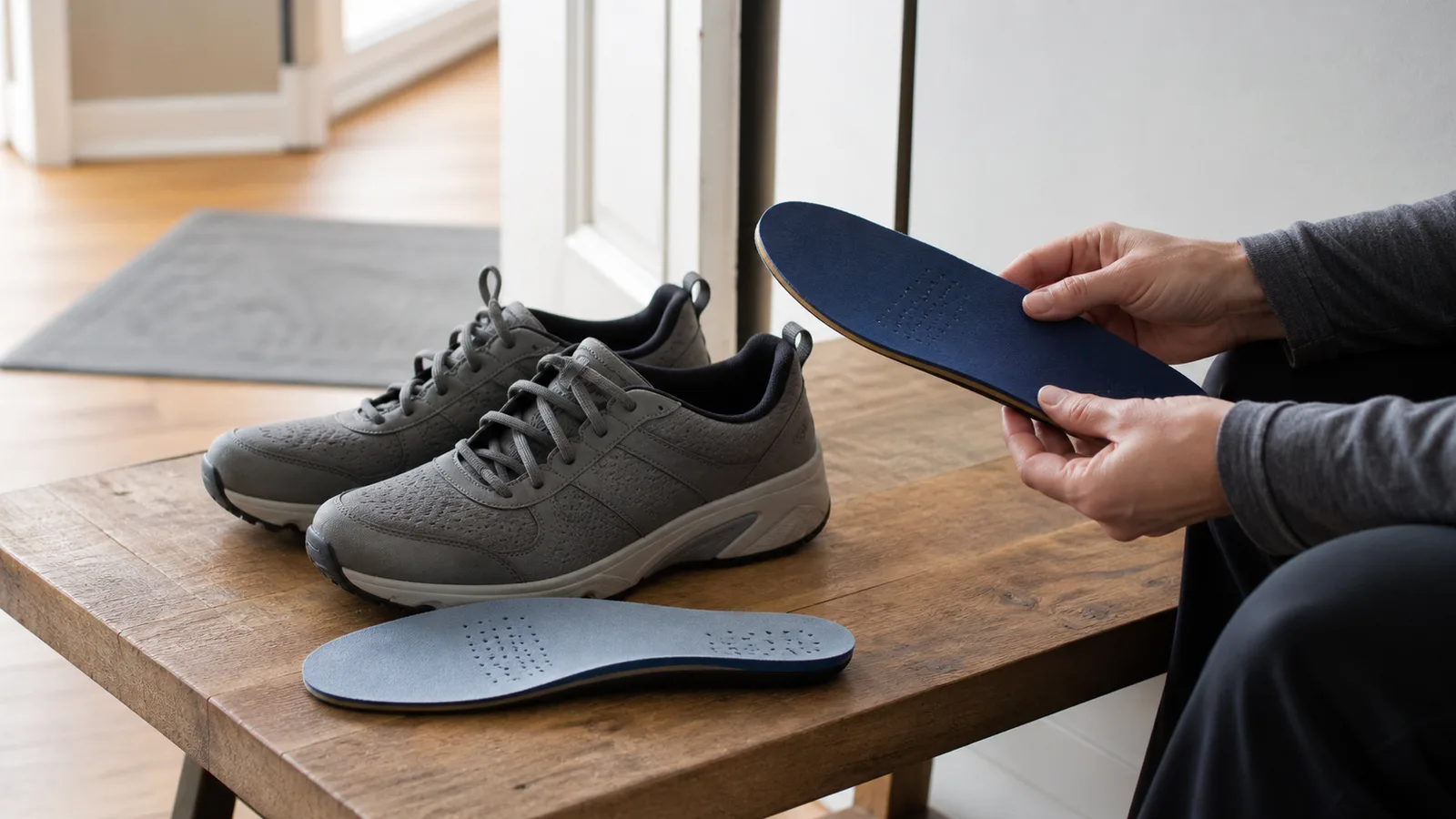
Best Insoles for Walking Shoes: Buyer Criteria That Keep Fit First
Insoles can help tune the feel of a walking shoe, but they can also make a good fit worse. Start with shoe volume, support feel, and returns.
Updated 13 June 2026